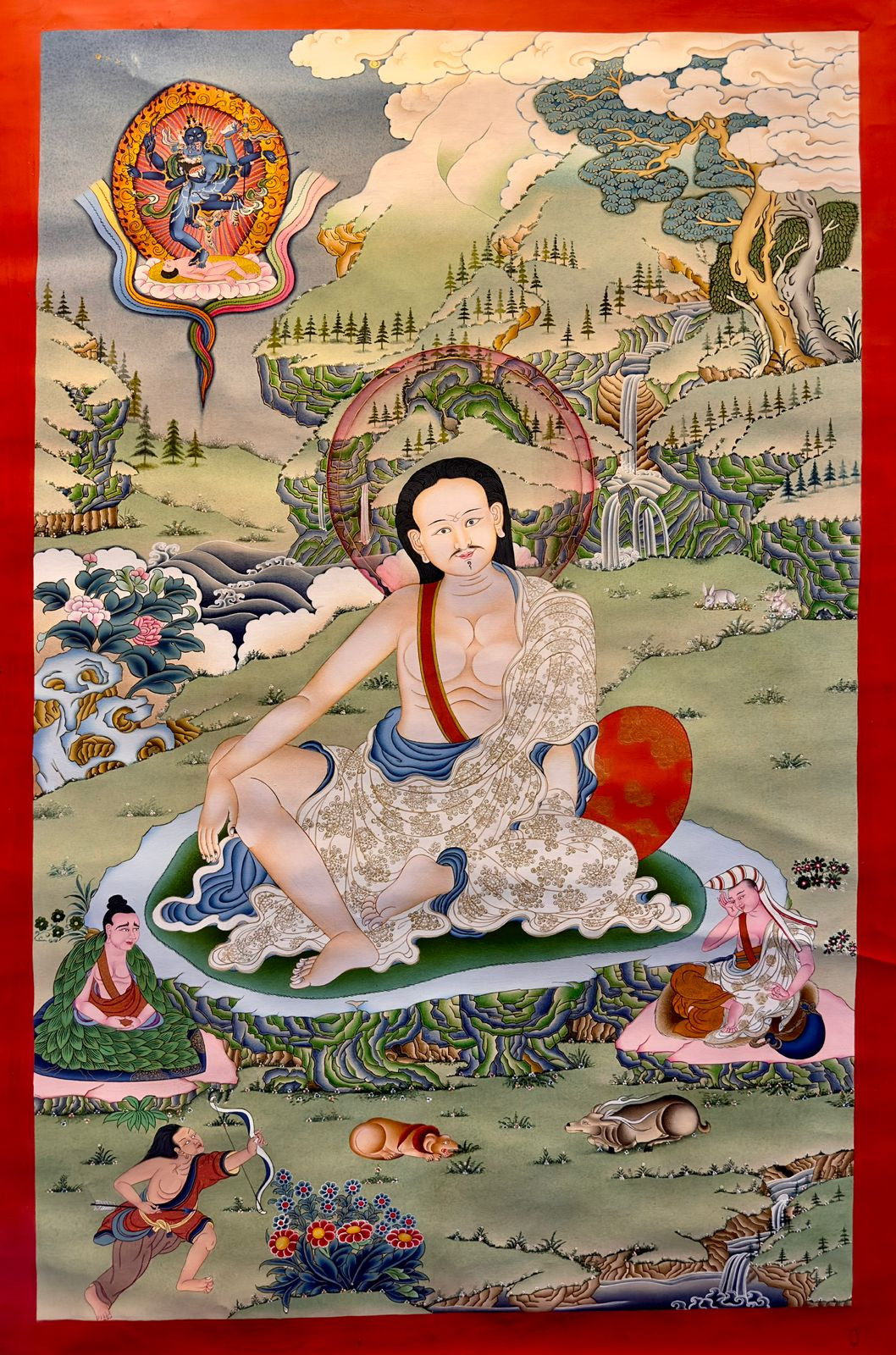

Milarepa
Milarepa (c. 1052–1135) is one of Tibet’s most revered Buddhist saints, yogis, and poets, and a principal master of the Kagyu lineage of Tibetan Buddhism. His life is a powerful story of karma, repentance, perseverance, and enlightenment within a single lifetime.
Key Aspects of His Life
* Early Life & Revenge Born into a prosperous family in western Tibet, Milarepa’s childhood turned tragic after his father’s death. His relatives seized the family property and abused them. Urged by his grieving mother, he studied black magic and destroyed his uncle’s house, killing 35 people. This act filled him with deep remorse.
* Purification Under Marpa Seeking redemption, he became a disciple of Marpa Lotsawa. Marpa subjected him to intense trials—most famously making him build and dismantle stone towers repeatedly—to purify his heavy negative karma before granting tantric teachings.
* Life of Asceticism Milarepa meditated for years in remote Himalayan caves, wearing only a thin white cotton robe—hence his name “Mila Repa” (Mila the Cotton-Clad). Living on nettle soup alone, his skin was said to have turned green. Through unwavering practice, he attained full enlightenment.
* Songs of Realization His spontaneous spiritual poems, compiled in The Hundred Thousand Songs of Milarepa, express profound insight in simple, direct language. These songs remain central to Tibetan Buddhist devotional and meditation traditions.
* Iconography He is typically depicted seated in meditation, right hand cupped to his ear—symbolizing attentive listening to the truth of Dharma and the inner song of realization.
⸻
Sacred Sites Associated with Milarepa • Milarepa Meditation Cave (Lhatse, Tibet) – A pilgrimage site linked to his solitary retreats. • Milarepa Cave (Manang, Nepal) – Located along the Annapurna Circuit at high altitude, featuring a sacred spring and monastery. • Mount Kailash – According to legend, Milarepa spiritually ascended its summit during a mystical contest.
